Discussions on employment relationships in business, sports, the armed forces, and other odd places.
Thursday, March 8, 2018
Drug testing on the Way Out for Employers?
In 1982 I was an Air Force captain starting law school. The US military was embarking on the nation's first large-scale drug testing program for its members. The first several years of that testing program revealed that approximately one in four individuals randomly tested were showing positive for marijuana or cocaine.
Over the years, drug testing moved into the civilian sector and it is now commonplace. Employer drug testing ushered in a wave of state regulation concerning employee rights, driven by concerns of invasion of privacy with respect to off work activity, disparate racial impact, and others.
Indeed, employee drug testing compliance was a major legal issue for many years. But we are starting to see another one of those seismic shifts in employment law that come along every decade or so. As more and more states legalize recreational marijuana, employers are starting to drop mandatory drug testing or applicant drug testing is a requirement for their employees.
This is driven by a number of factors, legalization being just one. According to at least one recent and reliable poll, 64% of Americans favor marijuana legalization for recreational use. Only 12% favored recreational legalization in 1969. In addition, it's getting harder and harder to find employees generally in this market, and drug testing weeds out,so to speak, a number of people who would otherwise be considered solid candidates. Failed drug tests reached an all-time high in 2017 according to SHRM data.
Excellence Health, a Las Vegas-based healthcare company with 6000 employees, no longer drug tests people coming to work on the pharmaceutical side of the business. AutoNation announced it will no longer disqualify job applicants who tested positive for marijuana. The Denver Post ended preemployment drug testing for all safety sensitive positions in September 2016. This likely explains the quality of some of the recent writing there about the Broncos quarterback situation.
Now, this drop in testing will be good news to some of you.
But lawyers need to start thinking about implications for their client base, particularly in areas of insurance coverage, if it starts becoming likely that a portion of the workforce is either actively or residually impaired. Or appears to be impaired. Drug testing still has a significant impact on federal contractor employment, and for federal contractors, drug-free workplace policies are going to become an increasingly important issue.
It's going to become even more important that employers are able to identify employees impaired by dope and not rely on postaccident testing. Employers will have to think creatively about how they deal with signs of incapacitation and what constitutes incapacitation at work.
These are all issues that companies need to start thinking about now. And understand that they may be looking at a workforce that is riskier than the one they have today.
Monday, February 19, 2018
Some thoughts on James Damore and the National Labor Relations Board
At some point, the NLRB will look back on the Advice Memorandum prepared by one of its regional attorneys concerning the Google/James Damore charge and ask itself how such a poorly thought out opinion letter made it into the Board's jurisprudence. The Memorandum has been excoriated in a number of different places. I don't mean to rehash those criticisms here.
Some background first. Damore was a Google employee who, in response to diversity training at the company and at the request of a company HR manager, drafted a memo that raised a basic question concerning the effectiveness of Google's diversity initiatives with respect to women. Damore initially circulated the first draft of the document with the HR management team through a feedback form it provided. The memorandum was eventually published on a companywide discussion group called "coffee beans", specifically designed to discuss Google's diversity and inclusion programs.
Damore's thesis was straightforward and supported by well-established research: if there are significant differences based on gender between how men and women operate in an environment like Google, then Google's diversity efforts, which focus on gender-based discrimination, will not solve the problem. Damore's memorandum specifically noted studies that demonstrated uncontroversial facts, including that: a) women are more prone to neuroticism (which meant experiencing higher anxiety and lower tolerance for stress), and b) that men demonstrate greater variance in IQ such that there are more men at both the top and bottom of the distribution, which might lead to an employer choosing more men than women when it hires from the "top of the curve".
Damore was careful to note that these tendencies were generalized across large populations and that these differences did not necessarily apply to all individuals. Eventually, as the memorandum gained more circulation within Google, it became the basis for Damore's termination. The company noted that its decision to fire him was based "solely on the part of your post that generalizes and advances stereotypes about women versus men. It is not based in any way on the portions of your post that discuss Google's programs or trainings, or how Google can improve its inclusion of different political views."
Notwithstanding the clear nature of Damore's memo as protected concerted activity, the Board attorney found that the company was justified in firing him because his memo contained language that the Board attorney considered to be stereotypical "based on purported biological differences between women and men." The board attorney noted that this constituted sexual-harassment notwithstanding the use of scientific references and analysis (the Memorandum actually puts quotation marks around the word "scientific").
The Memorandum makes no attempt to establish that these two items out of a memo drafted at the invitation of Google human resource managers constituted sexual-harassment under any type of legal standard. In fact, there is no discussion in the Memorandum of what type of sexual harassment Damore's memo contains. Most importantly, there is no assessment about whether the offending language was objectively hostile, measured against either Ninth Circuit or Supreme Court precedent.
Even more troubling is the analytical failure of the Memorandum. A company that solicits discussion about its diversity programs effectively opens the door to reasonable discussions about gender-specific traits and choices (again, this is not particularly controversial in the scientific literature). Moreover, the language Damore used in his memorandum is not even close to the inflammatory language cited by the Board attorney as unprotected because of its pernicious nature. Damore does not refer to supervisors as members of the Ku Klux Klan, he does not direct sexually abusive remarks to individual employees, or identify named employees as homosexuals. To be sure, there were individuals at Google who were offended by Damore's analysis. But this is not enough under modern sexual-harassment law. The remarks must be objectively hostile, something that a scientific analysis almost certainly is not. Moreover, as the Board has noted in numerous other cases, a certain amount of give-and-take discussion in the workplace, and especially the use of rough language by employees, is part of any workplace culture, and outside of extreme circumstances insufficient to exempt bad language from the protections of the National Labor Relations Act.
In short, the Advice Memorandum is so analytically and factually flawed that it screams "predetermined outcome." No doubt the author was offended by Damore's assertions and wanted to reward Google for punishing him for them. But this document not only undermines the Board's credibility in labor analysis, it potentially opens the door to a lot more problems down the road.
UPDATE: More research supporting Damore's position here.
UPDATE #2: Anti-white/male training at Google.
Friday, November 17, 2017
Al Franken Falls Victim to the Ray Rice Rule
I haven't written for a while because I've been trying to get my arms around the Colin Kaepernick situation, which seems to have morphed into the Jerry Jones/Roger Goodell situation, which morphed into the Ezekiel Elliott situation. All of which, except for the Elliott discipline, spells bad news for the NFL.
But layered over this has been a constantly shifting miasma of opinion and outrage that started with the Harvey Weinstein revelations. And then we had Roy Moore, and, today, Al Franken. So I thought this would be a good time to pick up the keyboard.
Notwithstanding the creepy and probably illegal (at least in one case) allegations against Republican senatorial candidate Moore, there is no hard evidence that he engaged in any of the conduct alleged. Not so with Senator Franken, a liberal Democrat from Minnesota, who has long been the darling of feminist advocates. And the picture of Senator Franken groping or attempting to grope the breasts of a sleeping woman on a military aircraft on a USO tour teaches us an important lesson that was first raised in the infamous Ray Rice elevator video some years ago.
Rice seemed to be on the track to rehabilitation following a domestic violence incident in a casino elevator. The NFL gave him a limited suspension, the local judiciary was satisfied with his entry into a diversion program, and he was welcomed back on the field by the fans. Then video surfaced of him actually striking his then fiancée and knocking her unconscious. Everything changed at that point. Rice has not played another down in the NFL.
What changed? Once there was irrefutable photographic evidence of his conduct, the NFL felt it could not ignore the outcry and bad press that broke immediately after TMZ put the video on its website. In other words, the verbal description of what happened did not carry the negative weight that the picture did. The whole thing caused the satirical website, The Onion, to put a story up with a headline "NFL Takes a Zero Tolerance Stance on Videotaped Domestic Abuse Incidents." A funny headline, but it's also absolutely correct.
As Mr. Franken is now discovering. The aspects of his offense that are alleged only in writing- forcing a kiss on the same woman in the picture (which actually involves unwanted physical contact, and intimate contact at that)-are being effectively ignored. It's that picture that is driving calls for his resignation.
And so the lesson for everyone policing conduct in the public sphere is that a picture is not only worth 1000 words. It's worth a career.
Wednesday, September 6, 2017
Brave New World of Sports Employment--Gamer Superstars
A 17 year-old video gamer who excels at a game called Overwatch was just signed to a player contract for a reported $150,000.
As a non-digital native, i.e., an old person, I was vaguely aware that there are such things as professional video gamers, and that some of them make money at it. Until recently, I was unaware that there was actually a professional Overwatch league, with, you know, teams and stuff. I suppose at some point, there will be uniforms, and cheerleaders, and over-priced food, as well.
But the lawyer in me looks at these situations and starts thinking about the implications. And there are some real legal issues here.
The first, and most obvious, is the Fair Labor Standards Act, which regulates child labor. And make no mistake, many if not most of these players, at least early on, will be underage minors. In fact, "sinatraa's" mother had to sign the contract with NRG because he was under age for legal competency. So these teams have to be aware that they are treading on dangerous ground, not just from the federal law, but state and local ordinances, as well.
The magic age for allowing children to work is 16 in non-hazardous occupations (and as young as 14 in limited circumstances) and 18 in hazardous occupations. Of particular note here is the FLSA exception that exempts children who are "performers" in motion picture or theatrical businesses. This provision is specific enough that it does not cover athletes, and I suspect that large-scale employment of children under the age of 16 in these kinds of gamer events is going to start raising some eyebrows (and lawsuits) quickly. In addition, these teams have to be cognizant of education issues - typically companies are not allowed to set work during school hours, or, must provide some type of make-up tutoring for their under age charges.
Moreover, a majority of states have child labor laws that piggyback on to the federal exemption, and in some cases go much further in protecting child employees.
That's for starters. There will be workers compensation claims--repetitive stress injuries are endemic to these gaming activities. And because the kid star is a kid, the clubs will be entering into arrangements with the guardians, parents or trustees of the child's estate, rather than the actual athlete. I'm thinking we'll see variations of the Coogan Law in California, where the compensation for the gamer's performance will be protected from the parents/guardians--what does that mean for incentives and other inducements?
A brave new world, indeed.
Employees Behaving Badly, Part 63
So, I guess not all nurses have the same protective atitude towards their patients as the nurse in Salt Lake City. Opening a body bag to check out some dead guy's privates ranks up there in the list of things we would not want to happen to us.
These Denver nurses are probably not long for their jobs after this. I'm guessing there will be a substantial patient and insurance blowback to the hospital.
Tuesday, September 5, 2017
Nice Piece on the History of American Labor and Why It Matters Less Now
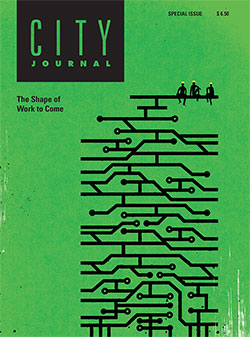
From City Journal. This is worth a read to explain the drop in US labor union participation rates, and why the NLRA is no longer the best vehicle to assist the American workforce.
Friday, September 1, 2017
Executive Action, Part 10--The EEO-1 Report
It seems that some form of sanity is starting to pervade the Federal executive branch, at least with respect to labor and employment law initiatives undertaken by the previous administration that were ill advised. The latest change relates to the ubiquitous EEO–1 form, which the EEOC requires of all employers with more than 100 employees, or federal government prime or first-tier contractors with 50 or more employees and a $50,000 contract. In a heavily criticized move, the Commission put in a new requirement mandating employers to submit their normal race, ethnicity and gender information, but now linked to W-2 wages and hours worked for all employees, grouped into 10 broad job categories that were then subdivided into 12 separate pay bands. The new requirements greatly increased the workload for employers and were challenged by numerous groups, including the US Chamber of Commerce, for their additional cost, limited utility, and potential for misuse.
Fortunately, yesterday the Office of Management and Budget indefinitely stayed the deadline for compliance with these new requirements. OMB noted that the data collected would not be grouped into meaningful categories, but rather would result in comparing employees in completely different jobs, who perform completely different tasks, requiring completely different skills. To cite an example that hits close to home, lawyers, doctors, accountants, nurses, and dietitians would all be grouped as "professionals," with their compensation data compared based on gender, race and ethnicity. Even the Commission noted that it did not expect that the data would identify specific, similarly situated comparators or that it would allow the Commission to establish pay discrimination as a legal matter. No wonder hundreds of employers were asking exactly why they were being forced to pull all this together.
For now, employers should plan to report the usual race, ethnicity and gender requirements within the EEOC job categories as they would normally. Those of us who are following these developments believe that, although the revised EEO-1 format is not dead, it's definitely on life support, and will likely not survive the pending appointment of a Republican majority on the OMB.
My thanks to Nick Haynes for his thoughts on this issue.
Subscribe to:
Posts (Atom)